Whitestone Sidewalk & Tree‑Root Repairs Explained
November 6, 2025
November 6, 2025
Cracked sidewalk near your Whitestone home and a big street tree root pushing it up? You are not alone. Many Queens blocks have mature trees and older concrete, which can create trip hazards and repair questions. This guide explains who is responsible, how tree‑root conflicts are handled in New York City, how to request inspections, and how to avoid violations or liens. Let’s dive in.
In New York City, you are responsible for keeping the sidewalk in front of your property safe. The city can inspect, issue violations, and require repairs if panels are cracked, broken, or uneven. You can review requirements in the official NYC DOT sidewalk guidance.
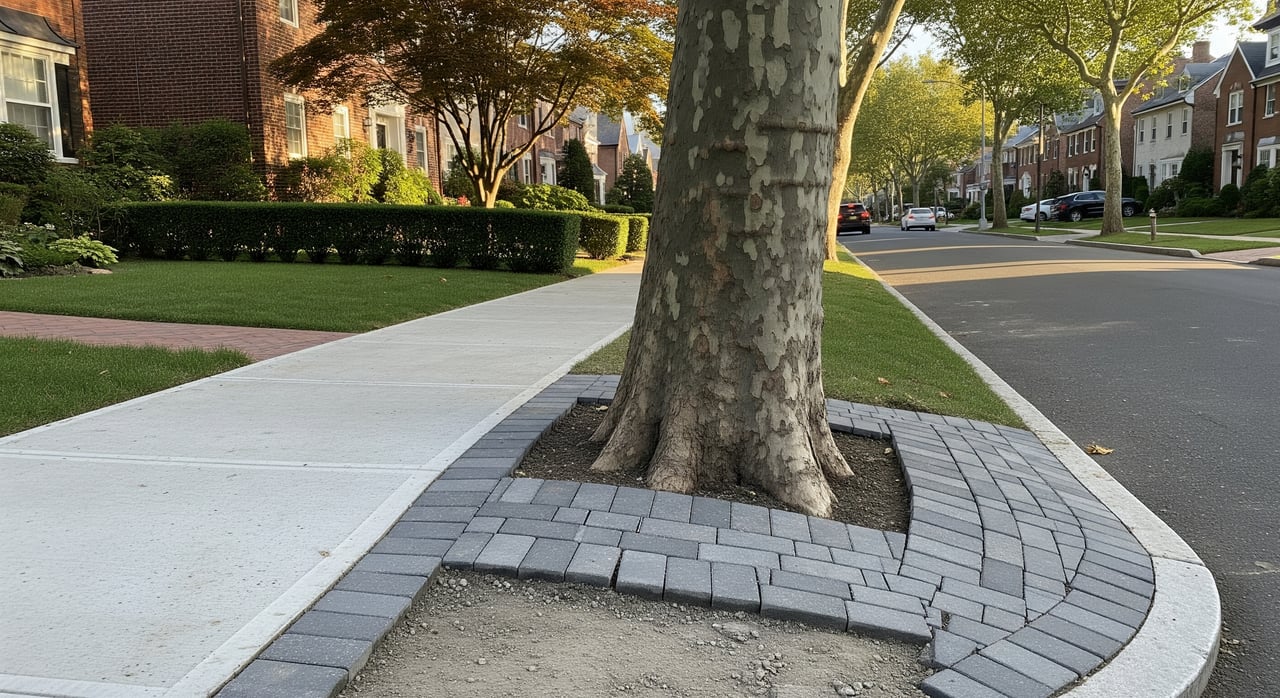
Street trees are managed by NYC Parks. If a tree is in the public strip or tree pit, it is a city tree. You cannot prune or remove a city tree or its major roots without authorization. To learn how city trees are cared for and who does what, visit NYC Parks street trees.
If you need an inspection or want to report a problem, start with 311. You can submit and track requests through NYC 311 online. In Whitestone, 311 routes your request to Queens units for DOT or Parks.
Sidewalk and tree‑root conflicts fall into a few common scenarios in Whitestone.
If a city street tree is pushing up your sidewalk, you still typically must repair the sidewalk panel. DOT handles the sidewalk condition and any violation. Parks handles the tree. Often, you will need both agencies involved so the repair preserves the tree and removes the hazard. Never cut or prune a city tree root on your own.
If a tree on your private property is causing the damage, you are responsible for the tree and the sidewalk repair. You have more options to prune or remove your own tree, but you still must follow DOT standards and any required permits for sidewalk work. The repaired sidewalk must meet DOT specifications so any violation can be cleared.
If the sidewalk collapses or a condition creates an immediate safety risk, the city may take emergency action. DOT can stabilize a hazard and later bill the owner for the work. Unpaid charges can escalate, so prompt response matters.
Use this simple step‑by‑step to get your case logged and moving.
Every site is different, but most fixes fit into a few categories.
Full panel replacement. This is common when a slab is broken or uplifted. Contractors remove and replace the affected panel to DOT standards. See the standards in the NYC DOT sidewalk guidance.
Grinding or saw‑cutting. For smaller height differences, grinding can remove a trip edge if allowed by DOT guidelines. An inspection outcome often drives this choice.
Root pruning with authorization. If a city street tree is involved, Parks must approve any root work. In many cases, Parks will perform or supervise selective root pruning and will decide if a root barrier is appropriate. Never prune roots of a city tree without Parks authorization.
Tree‑sensitive designs. In blocks with mature trees, the city may consider solutions that work around roots. Options can include partial panel designs that bridge high roots, root barriers, flexible paving in limited contexts, or engineered soil cells to give roots space. These are case by case and must be coordinated with Parks and DOT.
Get the right permits. Sidewalk work requires DOT permits and construction to DOT specs. If a city tree or tree pit is affected, you also need Parks authorization.
Do not cut city tree roots. Unauthorized cutting or removal of a city tree or major roots can trigger fines and force you to pay for tree replacement. Always contact Parks through 311 first.
Use compliant methods and materials. Non‑standard materials or shortcuts can lead to rework and an open violation that will not clear.
Keep clear records. Save date‑stamped photos, 311 confirmation numbers, inspector letters, permits, and paid invoices. You will need these to prove compliance and close a violation.
Most Whitestone cases follow a similar rhythm, with actual time varying based on severity and season.
311 routing. Your request is logged and sent to the right Queens unit, often the same day or within a few days.
Inspections. DOT and Parks schedule based on urgency. Hazards move faster, while routine issues can take days to a few weeks.
Repair windows. If DOT issues a violation, you will receive a timeframe to complete repairs. Meet the deadline to avoid enforcement.
Seasonal workload. Street tree work is often seasonal, and Queens crews handle many neighborhoods. Build in extra time if you are coordinating both tree work and concrete replacement.
You can track service requests and updates through NYC 311 online.
If you do not correct a defective sidewalk, DOT can issue violations and fines. The city can also perform repairs and bill you. Unpaid charges can lead to additional penalties and, in some cases, liens or referral to collections.
Here is how to stay ahead of problems:
Act early. If you notice a hazard, request a DOT inspection right away. Early action shows good faith and can prevent a summons.
Follow agency instructions. If Parks says they must handle tree work, wait for their authorization or service. Cutting a city tree or large roots without permission can add penalties.
Choose qualified contractors. Make sure your contractor knows DOT sidewalk standards and obtains required permits.
Close the loop. After repairs, submit proof and request closure of any violation. Keep photos and receipts in case you need to show compliance.
Common pitfalls include unauthorized root cutting, using noncompliant materials, and forgetting to notify DOT that the repair is complete. Avoid these to save time and money.
If you plan to list your Whitestone home, a safe, even sidewalk supports curb appeal and a smoother buyer experience. Buyers and appraisers notice trip hazards at the front walk. Taking care of repairs before showings can reduce objections and keep your timeline on track.
You do not need to overdo it. Focus on hazards, clear violations, and panels that will not pass inspection. If a city street tree is involved, start the 311 process early so Parks and DOT can schedule their parts and you can finish on time.
If you want help planning pre‑sale touchups or timing sidewalk work around a listing launch, reach out. We can connect you with local, compliant resources and help you align repairs with your marketing timeline.
Ready to talk next steps for your Whitestone home? Request a premium consultation with Unknown Company to discuss curb appeal, pricing, and a made‑for‑market plan.
Stay up to date on the latest real estate trends.


We pride ourselves in providing personalized solutions that bring our clients closer to their dream properties and enhance their long-term wealth.